
Keep Salesforce metadata translations structured, approved, and deployable — across every connected org.
What does it do?
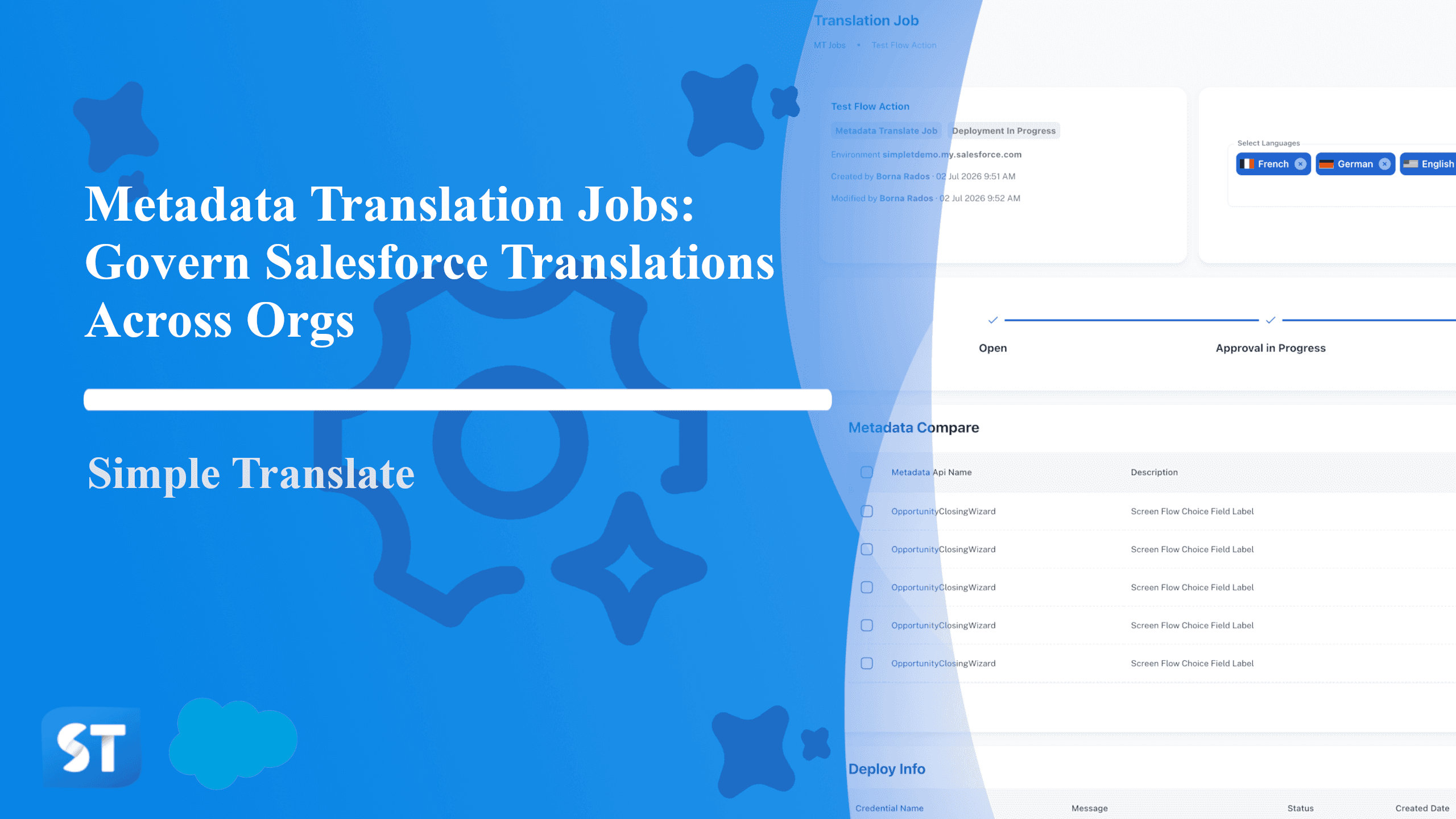
Metadata Translation Jobs give teams a structured way to translate, approve, and deploy Salesforce metadata, Experience Cloud content, and XLIFF files, with a clear lifecycle and role-based access.
The Problem: Uncontrolled Translation Work Across Multiple Orgs
Common challenges include:
No separation between metadata, Experience Cloud, and XLIFF translation work
Source metadata changing mid-translation
No visibility into what's translated versus what's deployed
Deploying to an org with missing components and breaking the release
Anyone with access able to deploy, with no approval step
These issues lead to deployment errors, approval bottlenecks, and mismatched translations.
The Solution: Structured Jobs with Built-In Governance
With Metadata Translation Jobs, teams can:
Choose a job type: Standard Metadata, Experience Cloud, or XLIFF File
Work from a stable snapshot, unaffected by later source changes
Compare translations against what's live in each connected org
Move jobs through a defined lifecycle: Open → Approval In Progress → Approved → Deployment In Progress → Closed
Run a pre-deploy check that flags missing components before deployment
Deploy Standard Metadata Jobs to multiple orgs at once, or export Experience Cloud (XML) and XLIFF (ZIP) jobs
Clone a job to adapt it to a new org or language subset
Restrict deployment with role-based access: VIEW, MANAGE, and Translator
Key Business Benefits
1. Predictable Workflows
Defined job types and a fixed lifecycle keep every translation effort consistent.
2. Fewer Failed Deployments
Pre-deploy checks catch missing components before they break production orgs.
3. Clear Accountability
Role-based access ensures only the right people approve and deploy.
4. Faster Multi-Org Rollouts
Cloning and simultaneous deployment get the same content to every org faster.
With Metadata Translation Jobs, every translation effort stays structured, approved, and deployable, across every connected org.
Published:
Back to the Articles List


